

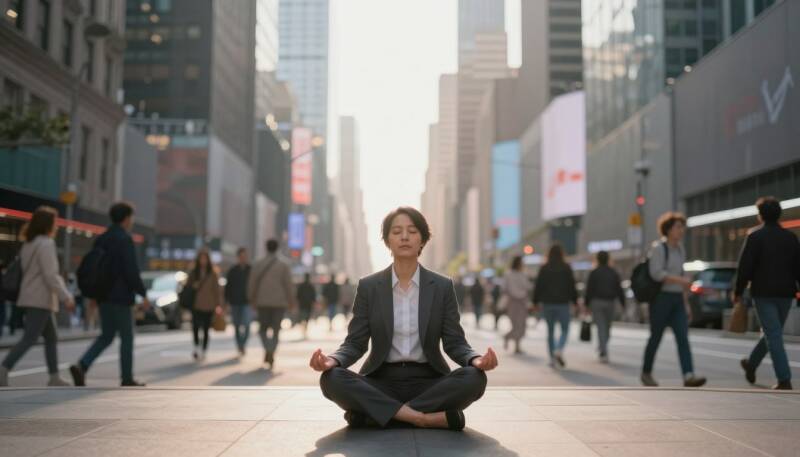
You can stay steady and keep close to the people you love, even when alerts and headlines make the present feel loud.
Anxiety and fear are natural responses. Your body is trying to protect you. That does not mean you are weak. It means your nervous system is doing its job.
We offer a gentle map for busy Canadian professionals. Small daily acts that bring joy. Deliberate time with loved ones. Less exposure to panic-filled media.
This guide previews a simple path: what you can control, fast ways to soothe your body, mental training that fits a packed schedule, and ways to hold connection without carrying other people’s alarm.
Think of calm as a practice, like returning to shore after a wave. Move through the steps slowly. Try what fits. Leave what doesn’t. Come back to what feels true.
Key Takeaways
- Accept that stress is a normal response during chaos.
- Do one small joyful thing each day.
- Connect with loved ones on purpose, not by habit.
- Limit panic-inducing media to protect your nervous system.
- Practice simple routines that fit real Canadian life and busy schedules.
Why life feels so chaotic today and why your anxiety makes sense
City life now moves at freeway speed, and our minds carry the noise.
Information overload shrinks focus. When too many inputs arrive at once, the brain keeps scanning. Attention becomes thin. Productivity falls. That friction raises stress and deepens anxiety.
At work, every ping pulls you off task. The stop-start rhythm drains mental energy by afternoon. Small interruptions add up. Your capacity for deep thought slips away.
Repeated stressors wear you down. Patience thins. Sleep frays. Motivation dips. Over months or years this drift can become burnout and affect physical health.Cliquez ici pour saisir votre texte.

Fear spreads fast when uncertainty is high
Headlines, group chats, and feeds amplify worry. At tense times, fear moves faster than facts. Even brief exposure to alarming news can make the air feel sharp.
- Life feels noisy—like living beside a freeway.
- Too much input makes the brain switch and scan.
- Pings at work create a silent, steady drain.
- Repeated stress can lead to burnout and poorer health.
- Fear is contagious during uncertain times; anxiety is a natural response.
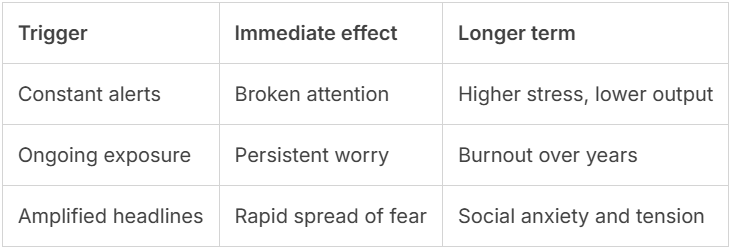
It makes sense to feel on edge. Once we see the pattern, we can choose steadier inputs and kinder responses—one day at a time.
Start with what you can control and release what you can’t
Begin by reclaiming the small circle you actually influence. Breathe. Notice posture. Name one thought. These tiny acts build a steadier inner state.
Shift focus from the outer world to your inner state
You may not control global events, but you have real power over your next breath, your next thought, and your next response. Treat bodily signals—tight chest, quick pulse—as useful awareness.
Choose a calmer way to respond to people and conflict
Use this short script when a conversation heats up:
- Pause—count three slow breaths.
- Soften your tone.
- Ask one clarifying question.
- Step away if the talk becomes harmful.
Make a simple control list: what you consume, when you rest, how you move, who you call, and what you do in the next moment. Release outcomes you cannot hold—other people’s reactions, the pace of change.
Most people carry fear beneath their words. You don’t have to absorb every opinion or every bout of negativity. Choosing a gentler way often bridges more than winning an argument.

How to stay calm and connected in this crazy world with better media boundaries
Information is like food—choose what nourishes your mind. Small rules give you back time and inner space. They keep your mind steady so you can be present with people you love.
Create simple filters for what information you allow in
- Pick one or two trusted sources. Check them once in a single, short window each day.
- Avoid doom-scrolling before bed. Sleep is repair time for your mind.
- Ask when you read: Is this actionable for me? If not, let it go.
Turn off the news more often to protect your mental space
Turning off the news is not avoidance. It is a kind choice that preserves your energy. Use quiet pockets of the day to focus and rest.
Reduce social media scrolling and try a mini digital detox
- Unfollow accounts that spike anxiety.
- Move social apps off your home screen or remove them from your phone.
- Set app limits and use blockers for short, deliberate minutes.
- Replace scrolling with a brief walk or a calming ritual.
Try a realistic rhythm: quick, intentional check-ins, then return to focused work. In time, you’ll gain perspective and more spacious time for the things that matter today.
Calm your body in minutes when you feel stressed or panicked
Panic can arrive suddenly; simple body practices can shift its hold within minutes. We invite a small set of tools you can use anywhere—at your desk, on the TTC, or before a meeting.

Take deep breathing seriously as an on-the-spot reset
First, validate the body’s alarm. When you may feel panicked, your nervous system is trying to keep you safe. Speak to it gently.
Diaphragmatic breathing: breathe in so the belly expands. Hold up to about 10 seconds if comfortable. Exhale slowly. Repeat about ten times. This practice can slow heart rate and soften tight shoulders.
Use a quick grounding practice to return to the present moment
A short grounding routine brings the mind back into the room. Name five things you see. Name four things you feel. Say three sounds you hear. Note two smells and one small taste. Each step roots you in the moment like returning to shore.
- Pair breath with a phrase: “Right now, I am here… right now, I am safe enough.”
- Even two minutes can help feel steadier when stress spikes.
- Repeat kindly. Practice matters more than perfect form.

Build a mind practice that helps you feel less overwhelmed
Tiny habits reshape how you meet hectic times and quiet the inner chatter. Think of this as gentle training. We return attention, again and again, like calling a puppy back to the porch.
Mindfulness meditation for calmer thoughts and clearer decisions
Mindfulness meditation is simple: sit, breathe, notice the mind, let thoughts pass without chasing them. A few minutes daily reduces anxiety and clears space for better decisions.
Try 3–5 minutes in the morning or between meetings. Consistency matters more than length.
Journaling to process racing thoughts and regain control
Use a five-minute “mind sweep.” Dump racing thoughts onto paper. Once written, you can separate what’s actionable from noise.
Choose one small next step. This brings practical control and relief.
EFT/tapping as a practical way for fear and uncertainty
EFT is a hands-on tool when logic feels thin. Use resources like The Tapping Solution app or search Brad Yates on YouTube.
"Even though I feel panicked and helpless, I accept myself and breathe."
Try brief scripts, and practice the ways that settle you. Small regular acts grow steadier minds across years.
Move your body to change your state and reconnect with the world
A short stretch or a brisk step outside often resets more than mood—it resets perspective.
Invite movement as a kind of medicine. When the mind feels stormy, the body can become the path back to shore.

Yoga for breath, awareness, and resilience during hard times
Think of yoga as a three-part reset: breath, awareness, and gentle strength. It supports resilience without perfection.
Try a short evening flow, three sun salutations, or child’s pose with long exhales. These small practices lower stress and steady the nervous system.
Go for a walk outdoors to reset your perspective
A daily walk can be a steady anchor. Notice winter light, summer shade, a wind off the lake. Each step widens perspective.
In Canadian city life, a block loop or a park stroll at lunch still counts. Make the walk part of your day so it becomes natural, not another chore.
Exercise for endorphins, energy, and better mood
Movement releases endorphins. That boost lifts mood, steadies energy, and supports overall health.
Pick something sustainable. Short runs, a bike ride, or a quick strength set can cut stress and improve long-term health.


Make calm your default with routines that protect your time and attention
Simple rhythms shape an easier day; they keep attention from drifting. Routines are not rigid rules. They are gentle guardrails that save mental time and quiet the noisy parts of modern life.
Create a simple morning and evening rhythm you can repeat every day
Morning: drink water, take two quiet breaths, name one intention, then pick one priority for the day. These small things take only a few minutes, but they set the tone.
Evening: dim lights, lower screens, write one line in a journal, then a closing ritual that signals rest. Try this every day for steadier energy.
Set boundaries with email and notifications at work
Check email at set times. Turn off nonessential notifications. Protect a single focus block in your calendar where attention can deepen.
Remember: each interruption steals small slivers of time and leaves the mind scattered. Simple limits restore flow and reduce stress at work.
Use music intentionally to shift your mood and create peace
Choose playlists on Spotify or Apple Music for focus or gentle unwind. Instrumental tracks help concentration. Soothing songs help decompress after meetings.
When your day has a soft rhythm, calm becomes the default way you move through the world and you carry more peace.
Stay connected to family, friends, and community without adding more stress
Holding a soft space for each other helps neighbors, friends, and family breathe easier.
Reach out on purpose when loneliness arrives. A short call, a quick text, or a simple invitation can cut through a quiet day. Choose one small act that fits your rhythm.
Reach out on purpose when you may feel alone
Make contact a conscious choice. Call a family member. Text a friend. Let others know you are thinking of them. These small moves matter more than grand plans.
Plan small, meaningful time together that you’ll remember
Simple events create lasting warmth. Try a walk-and-talk, a potluck soup night, a brief video chat, or a board game evening. Aim for quality over length.

Honor each other through kindness, compassion, and practical support
Speak with a gentle tone. Offer help when you can—drop off groceries, sit quietly, or listen without fixing. Practical kindness holds people up in hard days.
Support your community when you have the space and resources
Give where you can. A donation, a check-in on an elderly neighbor, or joining mutual aid lifts the whole block. But set limits. Protect your own energy so you can remain present for others.
- Acknowledge loneliness: name it without judgment.
- Reach out intentionally: one small contact each week.
- Make memories: pick actions that bring warmth, not exhaustion.
Remember: you do not have to carry everyone. Be the steady light for a few people. That steady care builds a kinder community and steadier days.
Keep perspective by focusing on love, gratitude, and the little things
When days feel full and loud, small acts of love and gratitude reset perspective.
Invite a gentle detachment. This is not denial. It is stepping back from the drama so you can notice what’s steady and what’s true.
Try a daily “what’s steady” list: name three things going right. Maybe health supports, a warm shelter, one kind person, or a task you finished. These details ground the mind.
Do one small thing that brings you joy and one that helps others
Each day, pick one thing that makes you happy—tea, a short walk, a laugh. Then do one small act for others: a text, a surprise snack, a quick help. These two steps shift fear into kindness.
Strengthen a simple spiritual practice
Trust a brief ritual that fits you. Prayer, quiet nature time, or a short meditation can steady belief in something larger. No dogma—only a steady practice that soothes in uncertain times.
Love is a choice you practice: a softer response, a warm message, a generous reading of someone’s words. Gratitude need not be forced. Seek one small true thing each day—the sun on snow, a friend’s voice, a good cup of coffee.
"Little things refill us, drop by drop, even in hard times."
- Detach from drama so you can see things going well.
- List three things going right each morning or evening.
- Do one thing every day that brings you joy, and one that helps others.
- Keep a short spiritual practice for steady perspective.

Make it stick in real Canadian life with realistic self-care
Life in Canada asks practical solutions. Long winters, long commutes, and packed work calendars leave little spare time.
Small patterns, repeated each day, build steady benefits over months and years. These are not grand plans. They are tiny choices that protect your nervous system and your peace.
Protect sleep to improve mood, patience, and decision-making
Sleep is the quiet foundation of health. Aim for a simple wind-down: dim lights, fewer screens, and a consistent bedtime when possible.
Better sleep gives you clearer thinking at work, more patience with family, and steadier mood through the day.
Use food as fuel for steadier energy and well-being
Think of meals as fuel, not perfection. Add protein, fibre, and water. Crowd out ultra-processed snacks with fruit and simple meals.
Good food supports immune strength and steadier energy—especially important when stress runs high for years.
Create “calm pockets” at home, at work, and on your phone
Build brief refuges: two minutes of breathing before email, a stretch between calls, a quiet lunch without your phone.
Move social apps off your first screen. Set downtime, and pick one no-phone zone—bedroom, dinner table, or morning.

You have the power to choose small ways that protect your time and nervous system. Over months these habits shape a gentler, more resilient life.
Conclusion
A few steady acts each day can quiet the busiest mind. Small choices add up. They make space for more gentle living.
Start small, and choose kindness for yourself. Turn off the news more often. Reach out to loved people. Do one joyful thing daily. Build simple routines that fit real life.
Begin today with four tiny steps:
- one media boundary
- a two-minute breath
- a short walk
- a message to someone you care about
Measure progress softly: steadier sleep, fewer spirals, a calmer reply. Compassion threads the whole path—toward others and toward you. This, too, will pass; peace returns, moment by moment, and community grows along the way in our shared world.
FAQ
Why does life feel so chaotic today and why is my anxiety understandable?
How does information overload shrink my focus and raise stress?
What practical first steps help me shift from reacting to responding?
How can I set better media boundaries without feeling out of touch?
What quick techniques calm the body when panic rises?
How can a regular mind practice reduce overwhelm over time?
In what ways does moving my body help my mood and connection?
What routines protect my time and create calm as a habit?
How can I stay connected to family and friends without overcommitting?
How do gratitude and small joys help keep perspective?
What realistic self-care fits into a busy Canadian life?
Can music or nature really change my state quickly?
What if I feel overwhelmed trying to practice all this at once?
Daniel Germain
Continue Your Journey
If this article resonated with you, you may also enjoy these gentle readings:
Discover Peace, Happiness, and Inner Strength in a Post-COVID World
When the Soul Is Tired: Finding Peace in a Noisy World
Daily Rituals for Inner Peace – 7 Zen Practices to Transform Your Day
Ajouter un commentaire
Commentaires