

In times of global uncertainty, protecting your emotional and mental energy becomes essential. This guide explores practical ways to stay grounded, calm your nervous system, and maintain inner balance even when the world feels chaotic.

When the world feels loud, your inner world can do the same… That is human. We notice how packed calendars, constant pings, and headline loops keep the nervous system braced.
In this guide
• Why chaos drains your energy
• The belief-thought-feeling loop
• Practical ways to raise your vibration
• Protecting your energy in daily life
• Daily rituals for stability
• FAQ
In this guide, we share practical ways to raise your vibration in everyday life without sidestepping real responsibilities. Think of it as a gentle experiment. Small shifts, repeated daily, build steadiness even if outer reality stays noisy.
You can feel vibration in your body—heavy or light—and that makes the work tangible. We offer simple tools: brief meditation, grounding steps, movement, scent and water cleansing, decluttering, music, creative outlets, clear boundaries, and steady routines.
Take what fits. Leave the rest. This is care, not a rulebook. The aim is not forced positivity. It is returning to a calmer baseline again and again, even amid fear or anxiety.
Key Takeaways
- Small daily practices can shift energy and steady your nervous system.
- Feeling vibration in the body makes change practical and clear.
- Tools include meditation, grounding, movement, and sensory resets.
- Set boundaries and routines that protect focus and calm.
- Choose what resonates—this is care, not a strict plan.
Why chaos can drop your vibration and amplify anxiety
Chaos nudges the body into alert mode, shrinking space for calm and clarity. Uncertainty, speed, and endless updates act like a nervous-system amplifier. They pull posture inward, breathe up, and keep attention tight.
How energy spreads among people and through media
Emotions move fast. In meetings, transit, or group chats, tone and urgency pass from one person to the next. News feeds and media narratives repeat alarm. That repetition keeps the system scanning for danger.
Why fear feels heavy and love feels lighter
Fear often lands as pressure: shallow breath, clenched jaw, and a chest that seems to feel heavy. Love and calm feel spacious and uplifted. This is plain body language of different energy states.
If you find yourself absorbing intensity, that is not a flaw. It means you are sensitive and aware. We can learn small anchors instead of arguing with the wind.
- Hidden drain: Doomscrolling forms a loop that fuels anxiety and keeps attention locked on threat.
- Compassionate reframe: Sensitivity is a signal, not a fault.
- Key distinction: Awareness protects; panic takes up space in the chest.
“You cannot always control the chaos of the world, but you can choose the state of your inner world.”
| Trigger | Typical Body Cue | Energy Effect |
|---|---|---|
| Rapid news updates | Racing thoughts, tight jaw | Low, heavy vibration |
| Crowded commute or meeting | Shallow breathing, tense shoulders | Contagious energy among people |
| Moments of calm or connection | Open chest, easier breath | Higher, lighter vibration |
What it means to “raise your vibration” in present-day life
Think of vibrational frequency as the steady hum beneath your daily choices—what you think, feel, and repeat.
In plain terms, vibration is your lived baseline. It is not performance. It is how your mind and body feel most days.
Vibrational frequency as thoughts, emotions, actions and habits
Your frequency is built from small pieces: thoughts that loop, emotions you notice, the actions you take, and the habits you keep.
Shift one element—a kinder thought, a short walk, a simpler habit—and the day's tone can change.
Low vibrational versus higher vibrational states you can actually feel
Low vibrational states feel heavy and sharp: worry, judgement, overwhelm, and bitterness.
Higher vibrational states feel lighter and freer: relief, calmness, compassion, and purpose.
- Notice early body cues. A tight chest is useful information.
- Pick one supportive action that fits your schedule. Small consistency matters.
- Remember: low vibration is not failure. It signals rest or attention is needed.
| Aspect | Low vibrational | Higher vibrational |
|---|---|---|
| Thoughts | Racing, doubtful | Clearer, kinder |
| Emotions | Heavy, anxious | Open, calm |
| Action & habits | Reactive, chaotic | Intentional, steady |
| Overall energy | Low vibration; dense | Higher frequency; light |
Spot your current vibrational state without judging yourself
We invite a calm scan of your inner weather — no judgement, just noticing.
Ask softly: "Where am I today?" Say it as you would to a friend. Let curiosity lead, not criticism.
Body cues of low vibration
Notice physical signals: heaviness in limbs, a tight chest, stomach knots. Fatigue or restless buzzing in the muscles are common.
When you feel heavy or under pressure, the body often shrinks. That compression is useful information — not a failure.
Mind cues that show low vibration
Watch thoughts that loop: worry, doubt, catastrophic images. Harsh inner narration and a constant sense of urgency point toward a low vibration state.
- Invite a non-judgemental check-in: ask, "Where am I today?"
- Name body cues: heavy limbs, tight chest, knots, restlessness.
- Name mind cues: looping worry, doubt, catastrophic thoughts, harsh self-talk.
- Practice: "name it without becoming it" — notice fear without wearing it as identity.
- When judgement comes, treat it like weather. Breathe, then return to neutral observation.
- Try a simple 1–10 scale for steadiness. Track it gently over days to see shifts.
| Signal | Example | What it suggests |
|---|---|---|
| Heaviness | Heavy limbs, sluggish steps | Low vibration; need for rest or grounding |
| Tense chest | Shallow breath, tightness | Pressure in the system; attention needed |
| Looping thoughts | Worry or doubt that repeats | Mental stuckness; invites naming and release |
Awareness is the doorway. Once you can quietly see what’s happening in body and mind, you can choose the next gentle step. Fear is a drain—in the next section we explore how awareness protects you from being carried away by it.

Awareness versus fear: staying informed without buying into panic
Calm attention is a practical skill: it keeps you prepared without getting swallowed by panic.
Awareness is clear seeing. It is grounded planning, wise boundaries, and a steady mind within real reality.
Fear looks different. It is spiraling projection and urgency without clarity. Fear drains the nervous system and raises cortisol, which can weaken the immune response.
Why attention protects while panic exhausts
Awareness widens the lens. It helps you choose the next step from a broader reality. Fear narrows the view and locks you into a lower vibrational lens.
How media narratives can pull you off balance
Headlines are optimized for attention. Repeated alerts keep the system scanning for threats. That loop feeds worry and compresses perspective.
- Practical steps: wash your hands, make a simple plan, and keep your heart open.
- Information hygiene: pick trusted sources, limit check-ins, and avoid late-night news.
- Trust your autonomy: question narratives and choose interpretations that keep you steady and kind.
| Focus | Awareness | Fear |
|---|---|---|
| Effect on decision | Calm, clear action | Reactive, rushed moves |
| Impact on system | Balanced cortisol; steady | Elevated cortisol; depleted |
| Vantage | Wider reality view | Narrow, urgent state |
The belief-thought-feeling-action loop that sets your energy
A single belief can begin a chain that shapes how your body feels and what you do next.
The story you hold becomes thoughts, and those thoughts make a visible feeling in the body. That feeling nudges action. Action then creates a result that confirms the original belief.
How changing the story changes the emotion
Try a short example. If you believe everything is collapsing, your chest will tighten and your mind will spin.
If you choose a different sentence—"I can take one wise step"—the body softens and energy shifts. The thing that felt urgent can make you feel steadier.
What to do when thoughts keep returning to fear
Use this simple plan: label → breathe → redirect → act.
- Label: Name the thought in one phrase—this calms the alarm.
- Breathe: Slow exhale for thirty seconds to steady the nervous system.
- Redirect: Spot the story under the thought. Ask, "Is there another true story that creates space?"
- Act: Take one small, grounded action. Movement anchors energy.
Fear is a signal, not a verdict. Meet it with steady curiosity and simple practices. You will return again and again; that is the practice, and that is real change in this reality.
How to Raise Your Vibration When the World Feels Chaotic
A tiny, clear action can shift the day's temperature in your body. Start small. Notice what calms your breath and loosens your shoulders within minutes.
Start with one small shift that creates immediate relief
Pick one doable move for today. A 60-second breath reset. A short walk around the block. A single song that lifts you. A quick declutter of a surface. Or a splash of water on your face.

Build momentum through consistency, not perfection
Repeat one simple practice each day. Small acts made steady become your energetic set point more than rare, perfect rituals. Keep notes. Track which way gives relief within five to ten minutes.
Choose “take what resonates and leave the rest” practices
Give yourself permission for gentler rituals during busy or hard seasons. Pick what genuinely soothes you, not what looks best online. Experiment kindly. Notice what lights you up and keep that.
- You don’t need a life overhaul—one doable shift today is enough.
- Try immediate-relief options and observe what changes in your body.
- Consistency matters more than perfection; choose one practice and repeat.
Next: we offer a practical toolkit—meditation, grounding, movement, and more—so you can find the right ways to raise vibration for your day and time.
Try this today:
Take five minutes to breathe slowly, step outside, or talk with someone supportive. Small actions can quickly reset your nervous system and bring your attention back to the present moment.
Meditation to Raise Your Vibration and Transform Fear into Calm
Meditation offers an inner doorway where fear softens and presence widens.
Frame it as coming home. Imagine a quiet room inside yourself that remains steady even when the street is loud.
Set a simple intention in present tense: “I am practicing peace,” or “I embody trust.” Keep the sentence brief and repeat it once at the start.
Breath focus to clear mental chaos
Let the breath be an anchor for the mind. When thoughts stray, guide attention back to each inhale and exhale.
Try box breaths or slow counts. Ten slow breaths often calm racing thinking and steady the system.
Affirmations that support higher frequency
Use gentle rails of language: “I am safe in this moment.” “I am light.” “I choose awareness.”
Say them softly. Feel the words in your chest rather than forcing belief right away.
Short daily practice you can repeat on busy days
A micro-practice: one clear intention, ten slow breaths, and one chosen affirmation. Three minutes.
When you have more time, aim for 10–15 minutes with intention, breath focus, and affirmations. Consistency matters more than length.
"Guided practice transforms fear into an opening for love."
- Pair the practice with a cue—coffee, lunch, or bedtime.
- Repeat daily. Small practice stabilizes energy across your day.
Grounding with Mother Earth to stabilise your energy
Standing barefoot on the earth reminds the body it belongs somewhere steady. This is a neutral, nurturing reset—soil, stone, and roots hold a long memory.
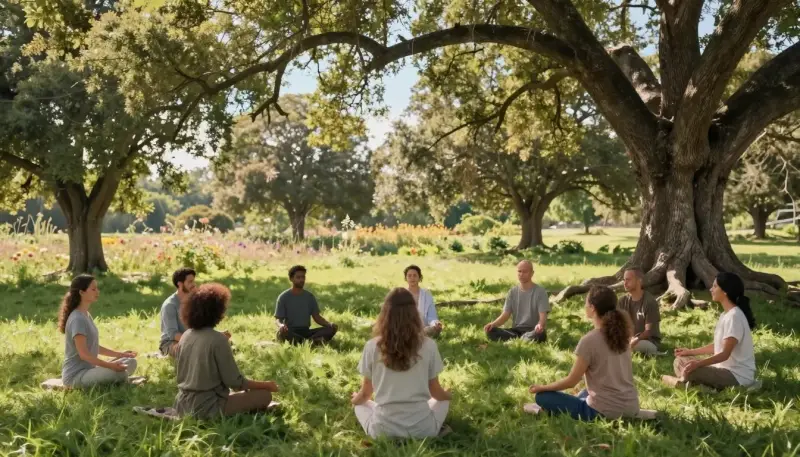
Barefoot grounding for a neutral, nurturing reset
Place bare feet on grass, sand, or simple soil for a few minutes. Breathe slowly. Imagine any heaviness draining downward into the ground.
Try this: stand still, soften your shoulders, and feel the contact beneath your soles. Repeat for a minute or ten and notice tension easing.
Nature time when you feel heavy, stagnant, or disconnected
Even urban days offer options: a park bench with feet on earth, a tree-lined block, a balcony with plants, or a lakeside path. Small things matter.
- Felt effect: grounding quiets mental noise and brings you back into your body.
- Short time: ten minutes outside can shift your internal space and life energy.
- Senses: Notice light, wind, birds, and temperature on your skin as gentle reminders of safety now.
Steadiness first. When your baseline steadies, uplift and higher vibration follow more easily across daily life.
Spending time in nature has been linked to lower stress, better mood, and improved attention.
Move Your Body to Raise Your Vibration and Release Stagnant Energy
When feelings stall, the body often holds them like a quiet room. Movement loosens that stillness and invites flow.
Movement as motion of energy. Emotions become heavy when they are held. When you move, you create circulation—emotion travels, shifts, and releases.
What the simple science tells us
Movement boosts endorphins, serotonin, and dopamine. These chemicals lift mood and calm stress.
At the same time, regular motion lowers adrenaline and cortisol—two drivers of that low vibrational feeling in the system.
Small, gentle options when energy is low
- A ten-minute walk around the block.
- Slow stretching or restorative yoga.
- Gentle mobility while the kettle boils.
High-release choices when you need a fast shift
- Dance in your living room—no technique needed.
- A run, a cycle, or a spirited workout class.
- Movement that feels freeing, not punishing.
Minimum viable movement: pick the smallest version you will actually do on a hard day. Your body often knows the way out before the mind does.
| Option | Intensity | Quick effect |
|---|---|---|
| Ten-minute walk | Low | Gentle mood lift; steadying breath |
| Stretch or restorative yoga | Low–medium | Releases tension; calms nervous system |
| Dance or workout | High | Fast endorphin surge; clears stuck energy |
Tip: Pair movement with music for a faster shift. This simple combination often reorients a heavy day into a brighter time.
Feel your emotions so they don’t get stuck in your body
Emotions are weather in the self: they arrive, change, and move on.
When we avoid what we feel, energy pools in muscles and organs. That stored charge shows up as tightness, irritability, or fatigue. Notice gently. No shame. Just a quiet curiosity from your mind.
When emotions are ignored, the body often carries the tension. Learning to acknowledge what you feel can prevent stress from becoming physically stored.

How avoidance turns feelings into stagnant energy
When you push feelings away, the body keeps them. Tension becomes a habit. Over time, the whole state feels heavier—a low vibration that wears you down.
A simple “name it, feel it, release it” emotional check-in
- Name it: say one word—"This is anxiety.”
- Feel it: locate the sensation in the body. Breathe into that place.
- Release it: exhale slowly. Allow tears, a soft sound, or a long breath.
Keep the practice brief and safe. Set a 2–5 minute timer so the process feels contained. Afterward, choose a regulating tool—a walk, a shower cleanse, music, or a quick tidy.
Remember: having emotions does not make you low vibe. You are human. Ask yourself, "What do you need right now—rest, reassurance, action, or connection? ”
| Step | What it does | When to use |
|---|---|---|
| Name | Calms alarm and gives language | At the first rising sensation |
| Feel | Locates energy so it can move | If tension sits in chest or stomach |
| Release | Allows transmutation and ease | After brief focused attention |
Use water and scent to cleanse your space and your nervous system
Turning a routine shower into a cleansing moment can feel like stepping back into yourself.
Water is a gentle reset. Step into warm water and imagine heavy energy rinsing off your shoulders, sliding down your arms, and into the drain.
Clearing visualisation for a quick shower ritual
Stand under the stream. Breathe slowly. Picture weight leaving your body with each exhale.
See the wash as a daily river that cleanses space around you. When you step out, carry less and feel lighter.
Aromatherapy basics that shift mood fast
Scent speaks directly to the limbic system. Lavender invites calm. Citrus—orange, lemon, or grapefruit—lifts and brightens.
Other gentle notes include eucalyptus, chamomile, and frankincense for soothing tones.
Safe ways to use essential oils
- Never apply neat. Dilute oils in a carrier like jojoba, sweet almond, or grapeseed.
- Diffusion offers a softer approach for shared space and nervous system care.
- Busy-day version: one deep breath over a tissue with a drop of oil, or a candle/incense if oils aren’t available.
Small sensory rituals remind your system it can stand down. Pair a short meditation or a favorite music track with scent and water. These simple things give space, reset energy, and make room for more calm and love.
Declutter your environment to create more energetic space
A small corner cleared is a gentle invitation for steadiness. Clutter is visual and energetic noise. When your things crowd a room, your mind has fewer quiet places to land.
Physical clutter often creates mental clutter. Creating a calm environment can help restore emotional balance and energetic clarity.

You may notice a felt sense: heaviness, distraction, or a quiet sense of being behind before the day begins. This small drain makes daily life feel slower and less bright.
Micro-decluttering habit
Try this simple way: remove or relocate five things each day. Keep a donation bag by the door. In five days you clear twenty-five items and make visible change with small time investments.
A mini life edit
Review people, routines, and online inputs. Ask: who or what drains you? Who steadies you? Which routines feel kind and which repeat tension?
- Mindful disposal: repurpose, resell, or donate when possible.
- Compassionate boundaries: distance from gossip loops; choose people that uplift.
"When you clear a corner of your home, you clear a corner of your inner world too…"
Music, sound, and creativity for fast vibrational upgrades
Music is an immediate bridge from a tangled mind back into steady feeling.
Playlist therapy is practical. Pick three to five songs that reliably lift you. Sing along. Dance in place. One track can change breathing, posture, and inner weather within minutes.
Simple binaural use for calm
Two tones—one in each ear—create a perceived beat. For relaxation, seek alpha frequencies near 8–13 Hz.
Use headphones and low volume for ten to twenty minutes while you work or unwind. This is an easy, focused way to shift frequency and quiet racing thoughts.
Creative flow as medicine
Draw, write, knit, or cook. Repetitive, gentle making reduces rumination and lifts mood.
Make without judgment. Let play lead. The aim is presence, not perfection.
| Method | Action | Quick effect |
|---|---|---|
| Playlist therapy | Singing, dancing to 3–5 tracks | Immediate mood lift; breath eases |
| Binaural beats | Headphones; alpha 8–13 Hz; 10–20 min | Calms mind; steadies vibrational frequency |
| Creative flow | Free drawing, cooking, knitting | Reduces rumination; restores life energy |
Sound and making are fast, kind ways you can change vibration in little time. Keep a short playlist and a simple project ready for days when you need a quick, gentle lift.
Protect your energy with supportive people and healthier inputs
Protecting your attention is a simple, kind practice that preserves energy.
Energy protection is stewardship, not a barricade. You can stay compassionate while honoring limits. That gentle stance keeps you present without being consumed.
The people we spend time with influence our emotional state more than we realize. Supportive relationships can help stabilize our energy and perspective during uncertain times.

A community that lifts you up versus loops of gossip and venting
Choose people who offer fresh perspectives and small solutions. Supportive conversation helps you see reality with care and calm.
By contrast, gossip loops and constant venting rehearse heaviness. They keep your mind buzzing and your energy low.
Digital boundaries to reduce comparison, judgement, and overwhelm
Set simple rules: time-box social apps, remove distracting icons from your home screen, and avoid scrolling before bed.
Curate who you follow. Fewer hot takes and less comparison clear mental space and reduce overwhelm in daily life.
Nourishing food and hydration to feel lighter and more energised
Food and water change how you feel fast. Whole foods, regular hydration, and fewer ultra-processed snacks brighten mood and steady the body.
Try one shift this week: an extra glass of water each morning and one whole-food swap at lunch. Small changes make big differences in energy and life quality.
- Quick ways to protect energy: limit reactive chat, choose solution-focused friends, and step away from heated threads.
- Common drains: comparison, judgement, urgent alerts, and endless commentary.
- Simple nourishment: more water, more vegetables, and fewer packaged snacks during stressful days.
| Area | Supportive choice | Energy effect |
|---|---|---|
| People | Solution-focused friends | Calmer, lighter |
| Digital | Time-boxed social checks | Less buzzing, clearer mind |
| Physical | Whole foods + hydration | More steady life energy |
Gentle truth: what you consume—socially, digitally, and physically—becomes part of your inner climate. Choose small, steady ways that keep your energy clear and kind.
Daily Routines to Raise Your Vibration During Stressful Times
A steady daily rhythm acts like a lighthouse when life crowds the horizon.
Routines are gentle beams, not strict rules. They give you a place to land when reality pulls hard.
Simple rituals you can rely on during chaotic seasons
Choose a short set of tiny habits you can actually keep. Calendar them like a meeting with yourself.
- Morning breath: three slow exhalations before you start the day.
- Short walk at midday for movement and reset.
- Evening shower cleanse and a 10-minute device-free wind-down.
Gratitude practice that goes deeper than repeating the same list
Write one thing you’re grateful for, then note 3–5 reasons why it matters. The reasons bring warmth.
Why it works: naming specifics trains your nervous system to feel safety and meaning. That softening raises vibration over time.
| Ritual | When | Quick effect |
|---|---|---|
| Morning breath | First 2 minutes of the day | Calms heart rate; steadies attention |
| Midday walk | Lunch or break time | Releases tension; shifts perspective |
| Device-free wind-down | 30–10 minutes before bed | Improves sleep; lowers reactivity |
| Upgraded gratitude | Evening journaling | Deepens meaning; softens nervous system |
Keep it simple. The way you return to these small acts each day matters more than intensity. Over weeks, these routines become steady habits that hold your self in a quieter place within busy life.
Conclusion
Small, repeated acts create a quieter inner landscape amid noisy external life.
Remember: you can live from a steadier frequency, one choice at a time. Awareness steadies; fear narrows. Stay informed without living in panic.
Use this toolkit: meditation, grounding with earth, movement, feeling emotions, water and scent, decluttering, music and creativity, supportive people, and gentle daily routines. Pick one practice and commit for seven days.
If you slip into a lower vibrational state, return kindly—no shame, no self‑attack. Notice how your body softens when you choose calm, love, and grounded action.
Like tending a small inner garden: water it daily, and over time your life changes quietly and deeply.
If you would like a simple step-by-step practice to calm the mind, you can explore our free guide here.
Frequently Asked Questions about Raising Your Vibration
What does it mean to raise your vibration in everyday life?
Raising your vibration means improving your emotional and mental state so you feel calmer, clearer, and more balanced. Practices like meditation, mindful breathing, movement, gratitude, and positive social connections help regulate the nervous system and support emotional resilience during stressful times.
Why do world events or chaos make people feel emotionally overwhelmed?
Global uncertainty and constant news exposure can activate the body’s stress response. When the nervous system perceives a threat, it increases cortisol levels, speeds up thinking, and narrows attention toward danger. This can lead to anxiety, fatigue, and emotional heaviness.
How can I stay calm and protect my energy during stressful times?
Simple daily habits can help stabilize your energy: limit news consumption, spend time in nature, practice slow breathing, connect with supportive people, and take short breaks from digital input. These small actions help reset the nervous system and restore emotional balance.
What are simple body signs that my energy is low?
Notice a tight chest, heavy limbs, shallow breathing, fatigue, and a sense of pressure in the head or shoulders. These are signals, not failures. They tell you it’s time for grounding, movement, or rest.
How can I notice worry and catastrophic thoughts without getting pulled in?
Use a naming practice: notice the thought, label it—“that’s worry”—and bring attention back to the breath or a small task. This gentle witness stance weakens the thought’s grip and returns you to choice.
How do I stay informed without sinking into panic?
Choose trusted sources and schedule brief check-ins rather than constant scrolling. Pair information with a stabilizing ritual—three breaths, a walk, a cup of tea. Awareness is protective; panic is depleting.
What is the belief–thought–feeling–action loop, and how can I change it?
Beliefs shape thoughts. Thoughts create feelings. Feelings drive actions. Changing any link shifts the rest. Start with one small act—a kind movement, a pause, a different thought—and watch the loop rewire over time.
What should I do when fear keeps returning despite my efforts?
Come back to curiosity rather than self-judgment. Short practices work: breathe for two minutes, name the feeling, move gently, and repeat a grounding phrase. Consistency matters more than perfection.
How can a short meditation help transform fear into calm?
Intentional breathing and focused attention reset the nervous system. Even five minutes of mindful breath or a guided rest reduces reactivity, opens heart-centered feeling, and lets compassion replace alarm.
Are there gentle breath techniques that clear mental chaos quickly?
Yes. Try a slow 4–4–6 rhythm: inhale four, hold four, exhale six. Or box breath: four counts each. These patterns lengthen the exhale, signal safety, and slow racing thoughts.
How does time in nature help stabilize my energy?
Earth contact and green surroundings downregulate stress hormones and reconnect you to a steady rhythm. Even a ten‑minute barefoot pause on grass or a short walk beneath trees calms the nervous system and grounds perspective.
What kinds of movement are best when I feel depleted?
Match movement to your energy. Gentle stretching, slow yoga, or mindful walking restores circulation without draining you. If you need release, dancing or a short cardio burst discharges stuck energy and lifts mood.
How can I allow feelings without being overwhelmed by them?
Use a micro practice: name the emotion, place a hand over your heart, breathe into the sensation for a minute, then imagine letting it flow out on the exhale. This “name it, feel it, release it” loop prevents stagnation.
Can water and scent really shift my nervous system?
Absolutely. A warm shower with a cleansing visualization washes away tension. Lavender calms; citrus uplifts. Used safely—via diffusion or diluted oils—these cues anchor new emotional states.
Why does clutter feel like low energy, and what small steps help?
Clutter creates visual and mental noise that drains focus and calm. Start with micro‑decluttering: clear one surface for five minutes each day. A tiny edit yields a surprising sense of space and lightness.
How can music and creativity lift my frequency fast?
Sound shifts emotion instantly. Curate playlists that invite movement, singing, or stillness depending on the need. Creative flow—writing, painting, making—moves attention out of worry and into expressive aliveness.
How do I protect energy around people who drain me?
Set compassionate boundaries. Limit time, steer conversations away from rumination, and prioritize time with those who nourish you. Community that uplifts replenishes resilience and joy.
What digital boundaries help reduce overwhelm and comparison?
Create device-free windows, mute triggering accounts, and batch news into short scheduled moments. Small limits stop endless scrolling and preserve inner calm.
Which daily rituals reliably keep my energy steadier during chaotic seasons?
Anchor your day with three simple rituals: a grounding morning breath, a midday nature or movement break, and an evening mini‑ritual of gratitude or reflection. Repetition builds trust in yourself.
How can gratitude feel deeper than a checklist of items?
Move from list-making to embodied gratitude: pause, breathe into the feeling, name why it matters, and let appreciation radiate through the body. That deepens its effect on mood and perspective.
Daniel Germain
Explore more on ZenSoulSpirits
If you found this guide helpful, explore more meditation and mindfulness articles on ZenSoulSpirits:
Ajouter un commentaire
Commentaires